.jpg&w=3840&q=75&dpl=dpl_2bUNLungjEqdo9fXata24Mw5Kf9R)
.jpg&w=3840&q=75&dpl=dpl_2bUNLungjEqdo9fXata24Mw5Kf9R)
.jpg&w=3840&q=75&dpl=dpl_2bUNLungjEqdo9fXata24Mw5Kf9R)
.jpg&w=3840&q=75&dpl=dpl_2bUNLungjEqdo9fXata24Mw5Kf9R)
.jpg&w=3840&q=75&dpl=dpl_2bUNLungjEqdo9fXata24Mw5Kf9R)
.jpg&w=3840&q=75&dpl=dpl_2bUNLungjEqdo9fXata24Mw5Kf9R)
.jpg&w=3840&q=75&dpl=dpl_2bUNLungjEqdo9fXata24Mw5Kf9R)
Shutter Speed Guide
$10USDDigital download · PDF guide · Nothing physical is shipped
The 180 degree rule, why it matters, and when to break it. How shutter angle defines motion blur and gives footage that unmistakable film quality.
Overview
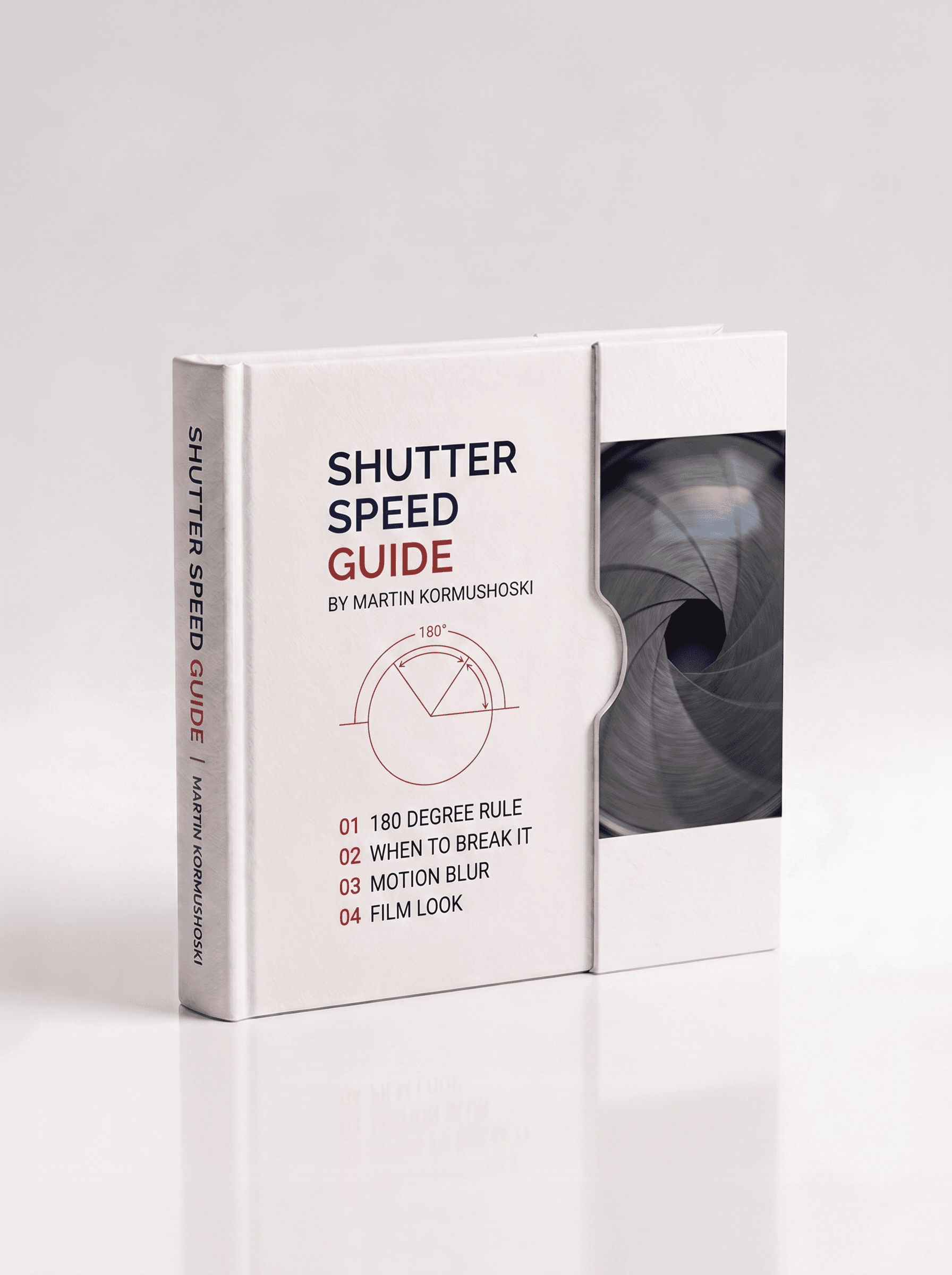
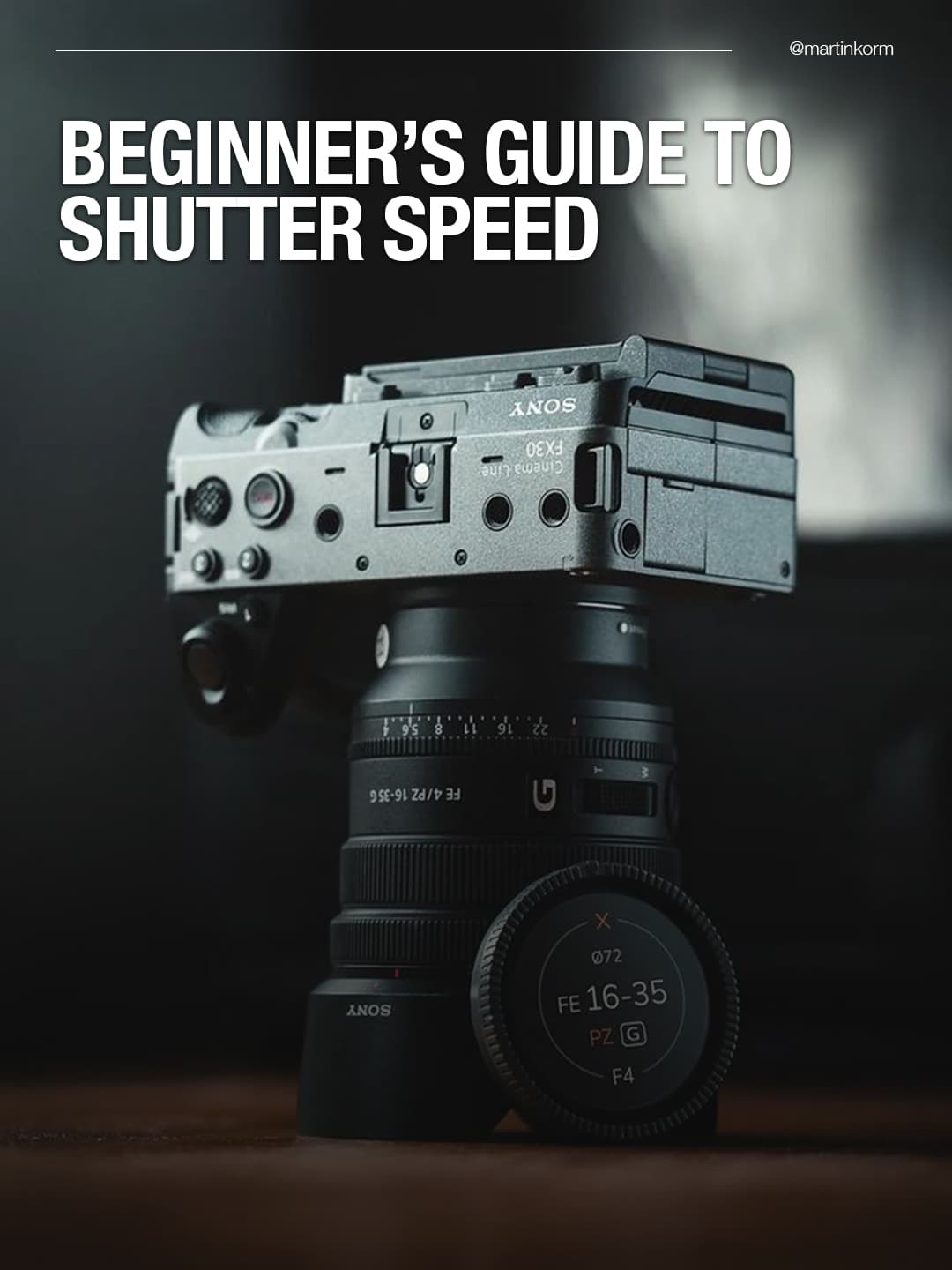
Your camera's shutter is like a curtain in front of the sensor, every frame it opens and closes, and shutter speed is how long it stays open. In video it does two jobs at once: it sets how bright your image is, and it shapes how motion looks. A slow shutter (1/50s) lets in more light and blurs movement the way films do; a fast shutter (1/500s) lets in less light and freezes everything sharp.
For most work, set your shutter to double your frame rate, the 180° rule, for the natural motion blur our eyes associate with cinema. It's a starting point, not a law: break it deliberately when you want a specific look, never by accident. And because 1/50s lets in a lot of light outdoors, ND filters are what let you hold the rule without overexposing.
What's Inside
- The 180° rule: set shutter to double your frame rate, 1/50s at 24/25fps, 1/60s at 30fps, 1/100s at 50fps, for natural cinematic blur
- 1/15s dreamy, movement smears into painterly trails, for light painting and abstract effect
- 1/50s cinematic, the 180° rule in practice: natural, immersive motion for narrative, interviews and everyday video
- 1/100s sharp, clean, defined edges on moving subjects, for sport and bright exteriors
- 1/500s frozen, time stopped cold with zero blur, for wildlife, action and product splash shots
- Why ND filters: 1/50s overexposes in daylight, a 3–6 stop ND lets you hold the rule outdoors
- In Cine EI / S-Log3, lock shutter and control exposure with aperture and ND, and remember motion blur is emotion, a cinematic language audiences already read
Format & Access
- A digital one-page PDF reference, built clean and written tight. This is a guide, not a physical product
- Instant download link emailed the moment you pay
- Saved to your dashboard for re-download anytime
- Designed to print and pin to the wall
Delivery
Your download link is emailed instantly and also saved to your MD MEDIA dashboard. Sign in with the email you used at checkout to grab it again whenever you need it.
- Aug 23, 2026
180° rule makes sense now
Finally understand why 1/50s at 24fps is the cinematic standard. The dreamy 1/15s vs sharp 1/500s examples showed me when to break the rule.
- Aug 4, 2026
Motion blur is emotion
Love that phrasing. The ND filter guidance on why you need them outdoors at 1/50s is exactly what I struggled with before.
- Jul 15, 2026
Shutter speed fundamentals
Good cinematic breakdown. The slow-shutter motion blur examples are helpful.
Questions, answered
What am I actually buying?
A PDF guide on the subject on this page: a one-page on-set reference for the library guides, and a longer multi-page guide for the Complete Camera Guide. Nothing physical is sent.
Is the Full Library cheaper than buying guides one at a time?
Yes. The Full Library gets every library guide in one payment for less than buying them separately, and the discount is applied automatically at checkout when every library guide is in the cart. The Complete Camera Guide is a standalone product and isn't part of that bundle.
Can I print them?
Yes. They're laid out to print and pin up, and most people keep them on their phone for set as well.
How do I get the files after I pay?
Delivery is instant. As soon as the payment goes through you get a confirmation email, and the download is saved to your dashboard: sign in with the same email you used at checkout, open your purchases and download from there. You can come back and download it again any time.
Do you ship anything?
No. Everything here is a digital download: nothing physical is posted and no delivery address is needed.
Can I get a refund?
Because the files are delivered instantly and can't be returned once downloaded, there are no refunds for change of mind. If a file is faulty, won't open, or is materially different from what's described, email sales@mdmmarketing.com.au and it will be replaced or refunded.
Can I share the files with a friend or my team?
Your purchase is a personal, non-transferable licence for your own projects, including paid client work. The files, download links and account access can't be resold, shared or redistributed.
I paid but nothing arrived. What now?
First check the spam or promotions folder for the confirmation email, then sign in to the dashboard with the exact email you entered at checkout: the download is there even if the email is delayed. Still stuck? Email sales@mdmmarketing.com.au with the email you paid with and it will be sorted.
Featured work
Shot and graded in house. The same grade you get in the pack.