

Aperture Guide
$10USDDigital download · PDF guide · Nothing physical is shipped
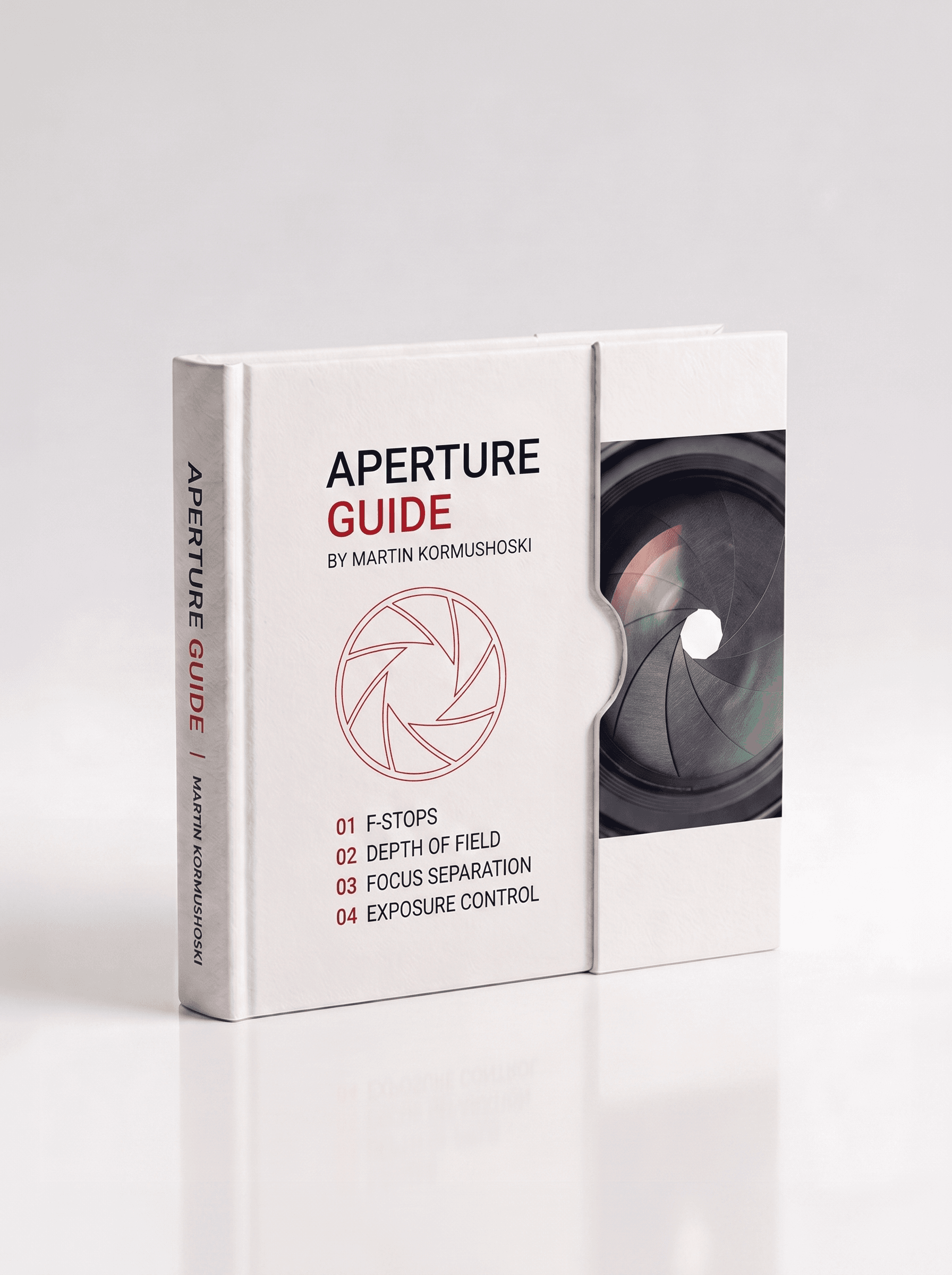
F-stops, depth of field, and the relationship between aperture and light. Control focus separation, manage exposure without touching ISO, and choose the right aperture for every shot.
Overview
Aperture is the opening inside your lens that controls how much light passes through to the sensor, think of it like the pupil of your eye, opening wide in the dark and shrinking in bright light. You set it with f-stop numbers, and here's the part that trips up every beginner: they work backwards. A small number like f/1.4 means a wide opening and lots of light; a large number like f/16 means a tiny opening and very little light. Just remember: small number = big hole = more light.
Aperture is unique among the three exposure controls because it has a strong creative side-effect: it sets your depth of field, how much of the scene is in sharp focus. Wide apertures throw the background into soft, creamy bokeh and make your subject pop; narrow apertures keep everything sharp front to back. It's one leg of the exposure triangle alongside shutter and ISO, and for video you usually control exposure through aperture and ND filters.
What's Inside
- F-stops work backwards: a small number (f/1.4) is a wide opening with more light; a large number (f/16) is a small opening with less light
- One stop = half or double the light, the same relationship that ties aperture to ISO and shutter in the exposure triangle
- f/1.4–f/2.8 wide open, shallow depth of field and creamy bokeh for portraits, fashion, product and interviews (focus is critical)
- f/4–f/5.6 mid range, versatile separation that keeps moving subjects sharp, for lifestyle, two-person, documentary and street
- f/8–f/16 stopped down, deep, everything-sharp focus and peak lens sharpness for landscape, architecture and group shots
- Depth of field isn't just aperture: longer focal lengths and closer subject distances both make focus shallower
- In video: with the 180° rule and a locked ISO, control exposure with aperture + ND, fast lenses and a VND are essential
- Beginner traps: don't always shoot wide open, remember aperture changes focus, carry ND filters, don't mix up f-stop direction, and stop down to f/4+ for groups
Format & Access
- A digital one-page PDF reference, built clean and written tight. This is a guide, not a physical product
- Instant download link emailed the moment you pay
- Saved to your dashboard for re-download anytime
- Designed to print and pin to the wall
Delivery
Your download link is emailed instantly and also saved to your MD MEDIA dashboard. Sign in with the email you used at checkout to grab it again whenever you need it.
- Aug 20, 2026
Aperture clarity
Finally got the backwards f-stop numbering right. The depth-of-field examples showing f/1.4 vs f/16 bokeh are perfect. No more shooting wide open for group shots!
- Aug 1, 2026
Stop-down wisdom
The 'don't always shoot wide open' advice saved my last four shoots. f/4+ for groups is my new rule.
- Jul 11, 2026
Aperture fundamentals
Good explanation of f-stops and bokeh. The exposure triangle integration is well explained.
Questions, answered
What am I actually buying?
A PDF guide on the subject on this page: a one-page on-set reference for the library guides, and a longer multi-page guide for the Complete Camera Guide. Nothing physical is sent.
Is the Full Library cheaper than buying guides one at a time?
Yes. The Full Library gets every library guide in one payment for less than buying them separately, and the discount is applied automatically at checkout when every library guide is in the cart. The Complete Camera Guide is a standalone product and isn't part of that bundle.
Can I print them?
Yes. They're laid out to print and pin up, and most people keep them on their phone for set as well.
How do I get the files after I pay?
Delivery is instant. As soon as the payment goes through you get a confirmation email, and the download is saved to your dashboard: sign in with the same email you used at checkout, open your purchases and download from there. You can come back and download it again any time.
Do you ship anything?
No. Everything here is a digital download: nothing physical is posted and no delivery address is needed.
Can I get a refund?
Because the files are delivered instantly and can't be returned once downloaded, there are no refunds for change of mind. If a file is faulty, won't open, or is materially different from what's described, email sales@mdmmarketing.com.au and it will be replaced or refunded.
Can I share the files with a friend or my team?
Your purchase is a personal, non-transferable licence for your own projects, including paid client work. The files, download links and account access can't be resold, shared or redistributed.
I paid but nothing arrived. What now?
First check the spam or promotions folder for the confirmation email, then sign in to the dashboard with the exact email you entered at checkout: the download is there even if the email is delayed. Still stuck? Email sales@mdmmarketing.com.au with the email you paid with and it will be sorted.
Featured work
Shot and graded in house. The same grade you get in the pack.